Brampton Workplace Sanitation
Brampton food safety and professional sanitation experts help you keep restaurants, commissaries, baking facilities, warehouses, and mobile food operations sanitized to standards. They disinfect high-touch points, food-contact surfaces, equipment, floors, drains, restrooms, and food prep areas using certified sanitizers, correct dilution, and documented contact times. in maintaining dining venues, commissaries, baking operations, warehouses, and mobile food operations to code. They disinfect high-touch points, food-contact surfaces, equipment, floors, drains, restrooms, and food handling zones with approved chemicals, proper dilution, and recorded contact times.
Main Points
- Brampton sanitation experts support restaurants, grocery departments, commissaries, warehouses, bakeries, schools, mobile vendors, and allergen-sensitive operations.
- Cross-contamination reduction is ensured by treating frequently contacted areas, food-contact equipment, kitchens, floors, drains, restrooms, and storage areas with sectional methods.
- Proper chemical concentration, appropriateness, and contact time are verified by trained contractors, with finishing recorded via samples, audits, and correction logs.
- Danger, output capacity, transitions, releases, and guidelines should inform maintenance timelines, with everyday, periodic, and annual activities designated by area.
- Focus on suppliers showing hazard analysis knowledge, public-health competency, safety training preparation, protection, testimonials, colour-coded implements, and assessment-ready sanitation files.
Brampton Operations That Need Food Safety Cleaning: Which Ones?
You must comply with food safety cleaning if your facility is falls under public health inspection, food premises regulations, or internal HACCP-based controls. This covers dining establishments, employee cafes, distribution hubs, market sections, meat shops, fish stands, retail outlets, and food service kitchens.
Proper hygiene protocols continues to be necessary in warehouses, food manufacturing plants, cold storage sites, retail bakeries, school nutrition programs, banquet halls, and meal delivery hubs. Mobile and temporary operations are included, including catering vehicles, festival vendors, and pop-up establishments. Your facility needs written cleaning standards should your workers work with ingredients, section ready-to-serve foods, heat finished items, or maintain allergen storage. In Brampton, hygiene is not discretionary; it forms part of legal, operational, and consumer protection compliance.
What Services Do Brampton Cleaning Experts Provide?
You need cleaning experts who disinfect frequently contacted areas, kitchens, floors, and bathrooms to comply with food safety and health regulations. They target these areas because they present the highest risk for cross-contamination, slip hazards, and hygiene violations.
When you know their cleaning scope, you can ensure your operation's cleaning procedures satisfy operational and regulatory requirements.
Focusing on High-Touch Surface Sterilization
establish how often each surface is disinfected
verify that sterilization was successful
Cooking Zones, Walking Surfaces, and Restroom Environments
Brampton cleaning professionals will handle kitchens, floors, and restrooms since each space presents separate food safety concerns, slip-and-fall, and community health challenges. In industrial kitchens, you need grease removal from cooking stations, appliance surfaces, drain systems, preparation areas, and backsplashes to minimize bacterial growth and pest activity.
Professional floor upkeep with documentation is also included. is also provided as part of the service.
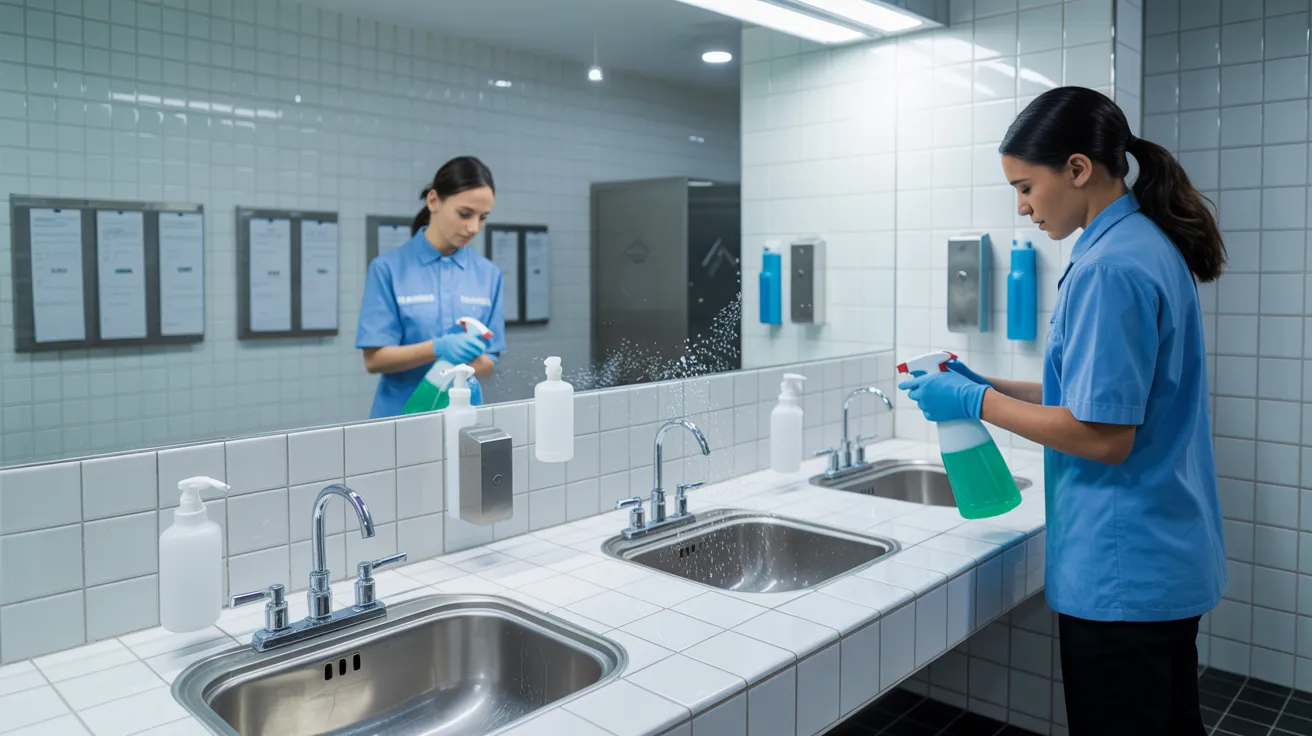
For restroom sanitation, cleaners disinfect high-touch surfaces, bathroom fixtures, stall dividers, supply dispensers, and trash receptacles, then replenish amenities and manage odor. They also maintain restaurant cleaning supply rooms where product storage, sink cleanliness, and drain systems impact daily sanitation standards and worker protection.
How Food Safety Cleaning Benefits Brampton Operations
To comply with regulatory mandates and pass inspections, Brampton facilities must follow appropriate cleaning protocols. You also minimize bacterial spread through proper cleaning of food-preparation surfaces, appliances, and frequently-touched items. Most importantly, you safeguard community wellness examination by reducing the chance of food poisoning in your establishment.
Sanitary Standards Adherence
Since Brampton food establishments must follow mandatory safety protocols, your cleaning procedures directly affects your competence to adhere to health codes, protect diners, and avoid regulatory penalties. You must maintain hygienic food handling zones, documented cleaning schedules, safe chemical management, and documented employee protocols that correspond to municipal and provincial inspection expectations.
Should your cleaning standards decline, you encounter notices, compliance orders, reputational harm, and possible interruption to service during further inspections or compliance actions.
Contamination Management
Meeting regulatory requirements also depends on your capacity to stop cross-contamination during routine food preparation and sanitation. You must separate raw ingredients from ready-to-eat foods, sanitize prep surfaces between tasks, and keep cleaning products separate from food areas. Established guidelines minimize contamination chances and support consistent compliance during inspections.
You could implement allergen segregation to stop main allergens from reaching common areas, containers, or machinery. Use dedicated cutting boards, color-coded tools, and strict utensil labeling so team members avoid blending products throughout cooking or delivery. Enforce washing hands following uncooked meat, fish, egg products, or allergens. Swap cleaning rags frequently, and test disinfectant concentration using strips. When employees learn these procedures each shift, you create a cleaner, safer operation that matches Brampton's safety requirements daily.
Public Wellness Protection
If food safety cleaning deteriorates, you don't merely face potential inspection issues—you amplify the risk of foodborne illness affecting customers, staff, and the broader Brampton area. You also weaken your role in protecting public health, especially in high-traffic food premises where pathogens travel quickly through surfaces, equipment, and touchpoints.
You require cleaning protocols that eliminate soils, sanitize effectively, and confirm results. This involves maintaining contact periods, using authorized sanitizers, logging schedules, and coaching employees to satisfy health-unit expectations. These controls promote illness spread by minimizing pathogens before reaching surfaces or food. Throughout Brampton, strong cleaning safeguards susceptible populations, minimizes disease potential, and demonstrates accountability. When you follow proper protocols, you exceed regulations—you mitigate risk and enable safer food service throughout the area.
In What Ways Does Cleaning Help Achieve Food Safety Compliance?
Rigorous cleaning routines support food safety compliance by decreasing contamination threats, limiting pathogen development, and positioning your facility in accordance with sanitation requirements under HACCP-based programs and public health regulations. You verify that contact surfaces appear visibly clean and microbiologically controlled, enabling documented preventive controls and inspection readiness.
Effective cleaning also enhances allergen mitigation by extracting residues that can cause undeclared allergen exposure. by clearing residues that can trigger undeclared allergen exposure.
Establishing When to Schedule Commercial Cleaning
Cleaning routines are most effective when you establish them according to risk factors, production rates, and legal standards rather than using only a fixed calendar alone.
handled independently
Finding Quality Brampton Cleaning Experts: A Guide
Begin by evaluating providers based on sanitation compliance standards—not solely on price alone. You should confirm that each organization comprehends CFIA, public health, and HACCP-based requirements applicable to your facility. Request insurance certificates, WHMIS compliance, staff training documentation, and oversight procedures. Assess whether technicians recognize cross-contamination risks, chemical handling protocols, and verifiable sanitation records.
You should further examine service consistency and answerability. Request references from food facilities in Brampton, then review reply speed, corrective action plans, and communication standards. Validate the company facilitates supplier audits and can present inspection-ready documentation to authorities or external parties. Confirm equipment receives maintenance, color-coded implements are applied correctly, and site-specific hazards are identified. A qualified provider protects compliance, product quality, and your brand reputation.
What's included in a Food Safety Cleaning Plan?
Create a documented plan that makes clear every sanitation responsibility, standard, and task prior to production start. You should detail cleaning schedules, authorized chemicals, concentration levels, contact duration, implements, and validation techniques for each zone, surface, and piece of equipment. Incorporate pre-operational inspections, corrective actions, and employee training requirements.
Your plan should also cover contamination prevention, garbage management, pest control procedures, and recorded timelines for restrooms, drains, floors, and food-contact areas. Detail how you'll separate raw and ready-to-eat processes, support ingredient tracking, and maintain accurate allergen labeling through validated cleaning between product changes. You should designate accountability, keep signed records, and review results against regulatory standards, HACCP controls, and customer requirements. When gaps appear, update procedures immediately and retrain staff.
Commonly Requested Inquiries
Can cleaning services support overnight shifts in Brampton facilities?
Yes, you can schedule cleaning services to accommodate overnight shifts in Brampton facilities. You'll coordinate overnight sanitation around production windows, security measures, and personnel needs. Services generally outline overnight procedures to reduce disruption, maintain compliance, and record finished work. You should confirm response times, oversight, lockout procedures, and disposal methods before service begins.
Do sanitation professionals provide hazard containment solutions?
Yes, you can find Brampton sanitation professionals to provide hazard containment services. They manage hazardous materials, assess risks, contain contamination, and begin swift cleanup to minimize risk and business interruption. You should confirm their response times, training certifications, PPE protocols, and waste management. If your facility must comply with industry standards, select a service that records events, maintains regulatory procedures, and supports audit readiness.
Will green disinfectants disinfect safely food-handling equipment?
Definitely, eco-friendly disinfectants function safely on food-handling equipment if you source items marked food-safe that adhere to compliance requirements. You ought to validate contact times, concentration levels, and rinse requirements in advance of use. Plant based formulas lower chemical burden, but you need evidence of effectiveness against relevant pathogens. To ensure residue free surfaces, adhere to manufacturer directions precisely and validate your sanitizer adheres to relevant food safety standards.
Do cleaning schedules allow for seasonal shifts?
Without question, cleaning plans adjust easily for production fluctuations. Modify frequencies, personnel, chemicals, and validation steps to match production rhythms while upholding regulatory requirements. Reduce equipment downtime by organizing sanitization amid production shifts, high demand periods, and usage patterns. Further modify SSOPs, employee training, and facility monitoring to account for periodic risks, additional allergens, or increased soiling. Ongoing evaluations maintain the program current.
Do professional cleaning services train employees on sanitation best practices?
Absolutely, commercial cleaners regularly deliver staff training on hygiene standards. Your team gets instruction on proper chemical use, dwell times, cross-contamination prevention, equipment disassembly, and paperwork. They typically align instruction with HACCP, GMP, and CFIA or regional health authority requirements. Many also perform sanitation audits to ensure adherence, identify gaps, and reinforce corrective actions. This enables you to sustain consistent procedures, pass inspections, and lower contamination dangers routinely.
Conclusion
When you partner with Brampton commercial cleaning and food safety experts, you don't just tidy up—you keep your operation inspection-ready and your protocols above board. From kitchens to processing floors, every polished surface and well-kept corner helps reduce pest intrusion and prevent costly setbacks. By arranging cleanings at the proper frequency and following a clear cleaning plan, you protect employees, patrons, and your reputation. In a tightly regulated environment, clean spaces are essential—they're part of doing business right.